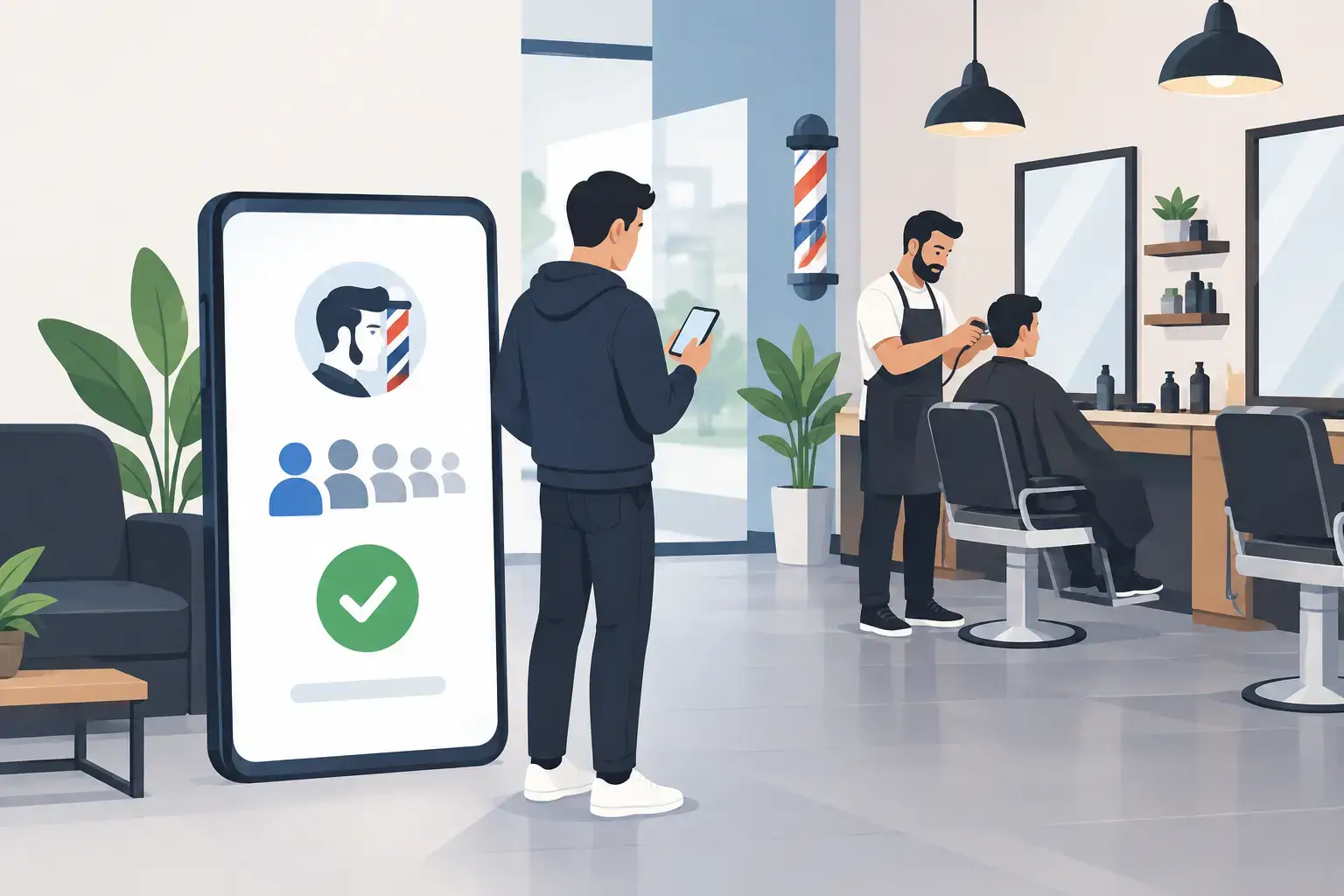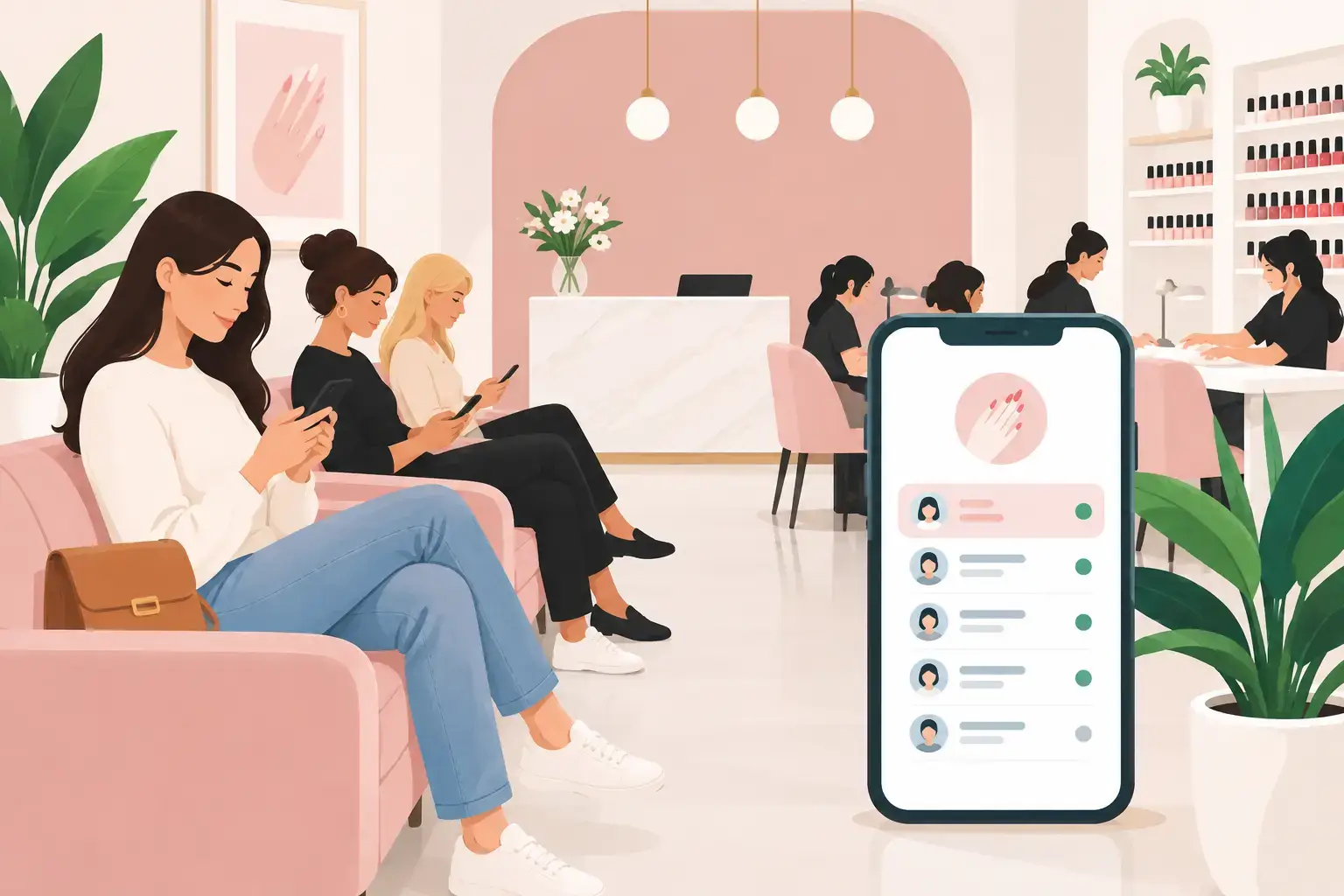
A packed Saturday should mean full chairs and healthy takings, not customers hovering by the door asking, “How long now?” QR code queue tracking gives walk-ins a clear answer without tying them to the waiting area. They check their place on their mobile phone, grab a coffee, browse nearby or wait in the car, then return when it is their turn.
For a barber, salon or nail bar, that small change solves a familiar problem. The wait is not always the issue. The uncertainty is. If a customer cannot tell whether they are ten minutes away or forty, they may leave. Once they have gone, the next chair can sit empty even though the shop looked busy five minutes earlier.
What QR code queue tracking does on the floor
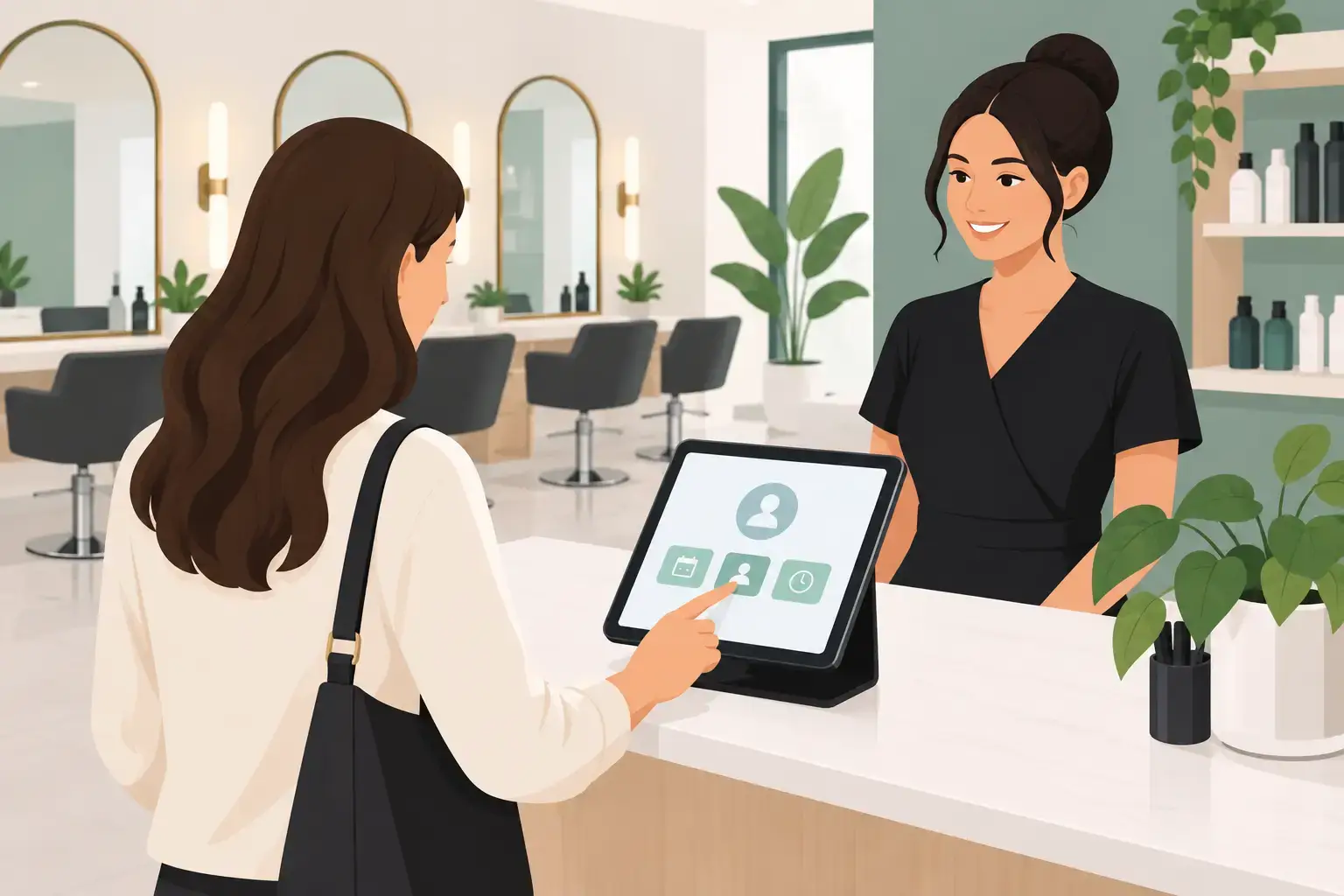
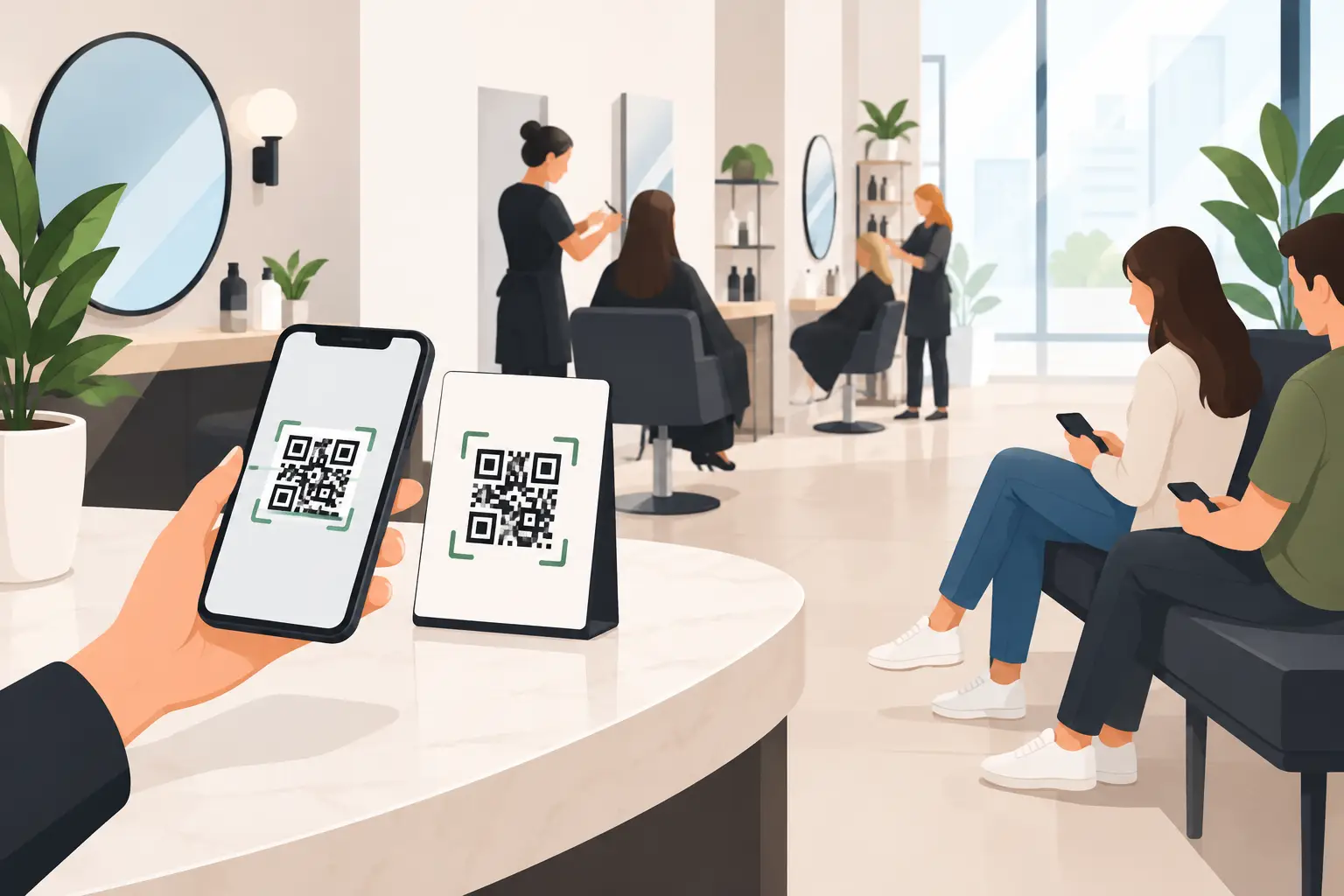
The process should feel simple because your customers are not coming in to learn new software. They arrive, check in on the tablet or with a member of the team, and receive a QR code. Scanning it opens a browser page showing their live position and estimated wait. No app to download. No account to create. No need to keep asking the front desk.
As barbers, stylists or nail techs finish, the queue moves. The customer sees that movement on their own mobile phone. When they are next, an automatic mobile phone notification can bring them back in. Your team can call them forward, assign the chair or station and get on with the service.
That is the point of QR code queue tracking: customers keep their place without being physically stuck in your premises. Your waiting area feels less crowded, and your team spends less time explaining a queue they are already managing.
Why a visible queue protects walk-in revenue
Walk-in trade is often decided in a few seconds. Someone sees a busy shop, looks at the people waiting and tries to guess whether it is worth staying. A vague “about half an hour” may be honest, but it does not give them much confidence. If the wait changes, they have no way to know.
A live queue changes that conversation. Instead of asking customers to trust a rough estimate, you give them a place in line they can see. They can make their own decision about how to use the time, while knowing they will not lose their turn for stepping outside.
This matters most during your pressure points: Saturday mornings, after-school cuts, late-night shopping, payday weekends and the run-up to holidays. These are the periods when every missed walk-in hurts, but staff are least able to keep repeating queue updates.
There is a trade-off. Queue tracking cannot make a slow service faster, and it will not help if the estimated times bear no relation to what is happening on the floor. Your team still needs to update the service status and manage no-shows properly. But clear information makes delays easier for customers to accept. Silence makes them assume the worst.
A customer journey that does not create more work
The best queue system does not replace your shop-floor routine with a complicated one. It supports what already happens.
A customer checks in and selects the service they need, such as a skin fade, wash and blow-dry, gel removal or manicure. The team can see who is waiting and what they are waiting for. When the right barber, stylist or nail tech is free, the next customer is called and allocated to a chair or station.
The customer does not need a password, staff do not need to remember individual logins, and nobody has to install an app. That low-friction approach matters. A queue tool that needs explaining at every check-in becomes another job for the person on the desk.
QR codes are particularly useful for family and group visits. A parent can hold the queue details on one mobile phone while children wait with them. A customer can also show the code again if they need help at the counter. The system should make the queue clearer, not force every person through a rigid digital process.
The difference between a queue and a crowd
A crowded waiting area can look like demand, but it can also look disorganised. Customers do not know who arrived first. Staff get interrupted with “Am I after him?” or “Who’s next?” The team may know the order, but the customer cannot see it.
A proper digital queue turns that crowd into an organised line. Your team controls the order, services and staff availability. Customers see their own progress without seeing private details about everyone else. The result is calmer conversations and fewer disputes over whose turn it is.
Keep staff controls quick and owner data private
Your staff need practical controls, not a management dashboard full of settings. On a busy floor, they should be able to add a walk-in, move the queue forward, mark a service as started or finished, and call the next customer from a phone or shared device.
Owners need a different view. You may want to look at takings, peak trading periods, service logging, staff activity, loyalty and lapsed regulars. That information is useful for running the business, but it does not need to sit open on the screen staff use to manage the queue.
Keep those roles separate. The team runs the queue. You see the money and performance information behind an owner PIN. This is not about mistrusting staff. It is about giving people the tools they need without putting sensitive financial data in the wrong place.
For shops with a TV screen, a queue board can add another layer of clarity. Customers can see that the queue is moving while they are in the shop, and the QR code keeps that same visibility with them when they step out. You do not need a TV for QR tracking to work, but it can suit larger waiting areas or multi-chair businesses.
How to introduce it without disrupting service
Do not launch a new system in the middle of your busiest hour and hope everyone works it out. Set it up before opening or during a quieter gap. Use your existing tablet for customer check-in if it is suitable, and let staff practise adding a few test customers, moving the line and calling the next person.
Start with a simple sentence your team can use every time: “Scan this to track your place. You can pop out, and we will let you know when you are next.” That is usually all a customer needs.
For the first week, watch how real queues behave. Are customers choosing the right treatment? Are wait times being updated when a longer service runs over? Does one barber regularly build a backlog while another has space? The queue gives you a clearer view of these patterns, but only if the team uses it consistently.
Avoid making the process too strict. Some regulars will prefer to sit and wait. Some customers will not have a smartphone, a low battery or confidence with QR codes. Keep the human option available. A staff member can still check someone in and manage their place. The QR code is there to give choice, not to exclude anyone.
When QR code queue tracking is the right fit
QR code queue tracking works best when walk-ins are central to your business and appointment software would be more than you need. It is a strong fit for barbershops with busy peaks, salons that take both bookings and walk-ins, and nail bars where treatment lengths can vary through the day.
It is less useful if every customer is booked into fixed slots and your waiting room is rarely full. In that case, improving reminders or appointment scheduling may matter more. But many shops sit between the two: bookings keep part of the day planned, while walk-ins fill gaps and drive extra takings. A live queue gives those walk-ins a better reason to stay with you.
BarBerQue is built around that reality: quick customer check-in, browser-based tracking, staff controls that do not slow the floor down, and owner reporting kept private. The aim is not to turn a barbershop or salon into a software project. It is to stop good customers walking away because nobody could tell them where they stood.
The next time the chairs are full and the door keeps opening, give customers something better than a guess. Give them a visible place in the queue, the freedom to use their time, and a clear reason to come back when their chair is ready.