Saturday afternoon, every station is full, two clients are choosing colours and three more have just walked through the door. Someone asks, “How long is the wait?” Your receptionist gives their best guess. Ten minutes later, that client has gone elsewhere - not necessarily because the wait was too long, but because nobody could tell them what was happening.
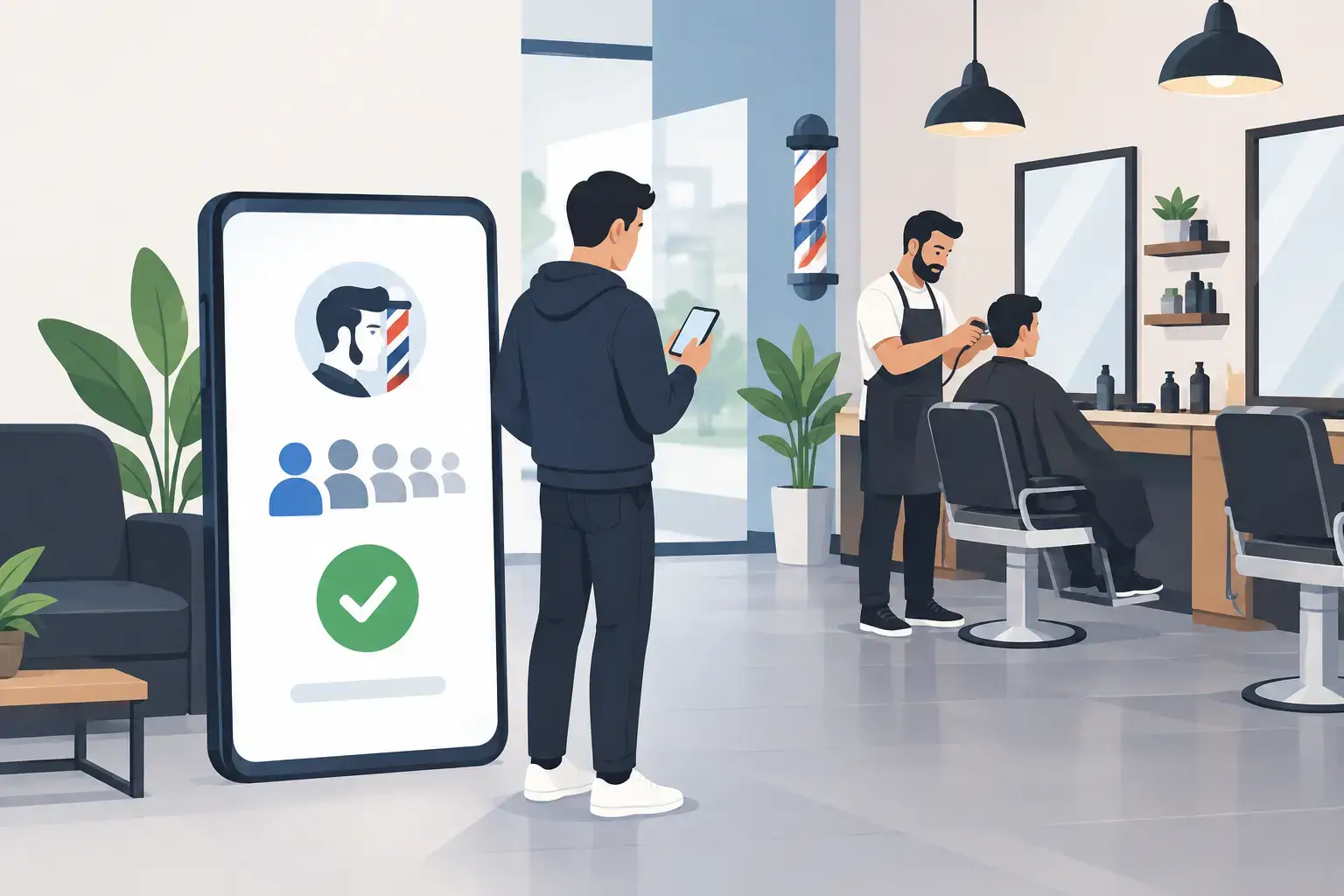
A nail salon waiting list app fixes that familiar problem without turning your nail bar into a complicated booking operation. It gives walk-ins a clear place in the queue, shows them a realistic wait and lets your team focus on treatments instead of repeating names, estimates and apologies.
The aim is simple: no more “who’s next?”, fewer customers walking out, and a calmer floor when it gets busy.
Why a vague wait costs nail bars money
Walk-in trade can be unpredictable. A quiet Tuesday can turn into a queue after school finishes. A rainy Saturday can fill every chair before lunch. Acrylic extensions, BIAB overlays, gel removals and nail art all take different amounts of time, so a queue does not move at one fixed speed.
That is why a handwritten list or a verbal promise creates trouble. Clients do not know whether they are fifth in line or nearly next. Your nail techs get interrupted to answer the same questions. And if a client leaves to browse nearby shops, get a coffee or pick up a child, they may assume they have lost their place.
The costly part is not always an empty chair. It is the client who would have waited if they had known the truth. Clear wait visibility gives people a reason to stay connected to your salon, even when they do not want to sit in the waiting area.
What a nail salon waiting list app should do
A useful queue system should handle the real flow of a nail bar, not just collect names. The best setup is quick enough to use while clients are arriving, technicians are finishing treatments and the phone is ringing.
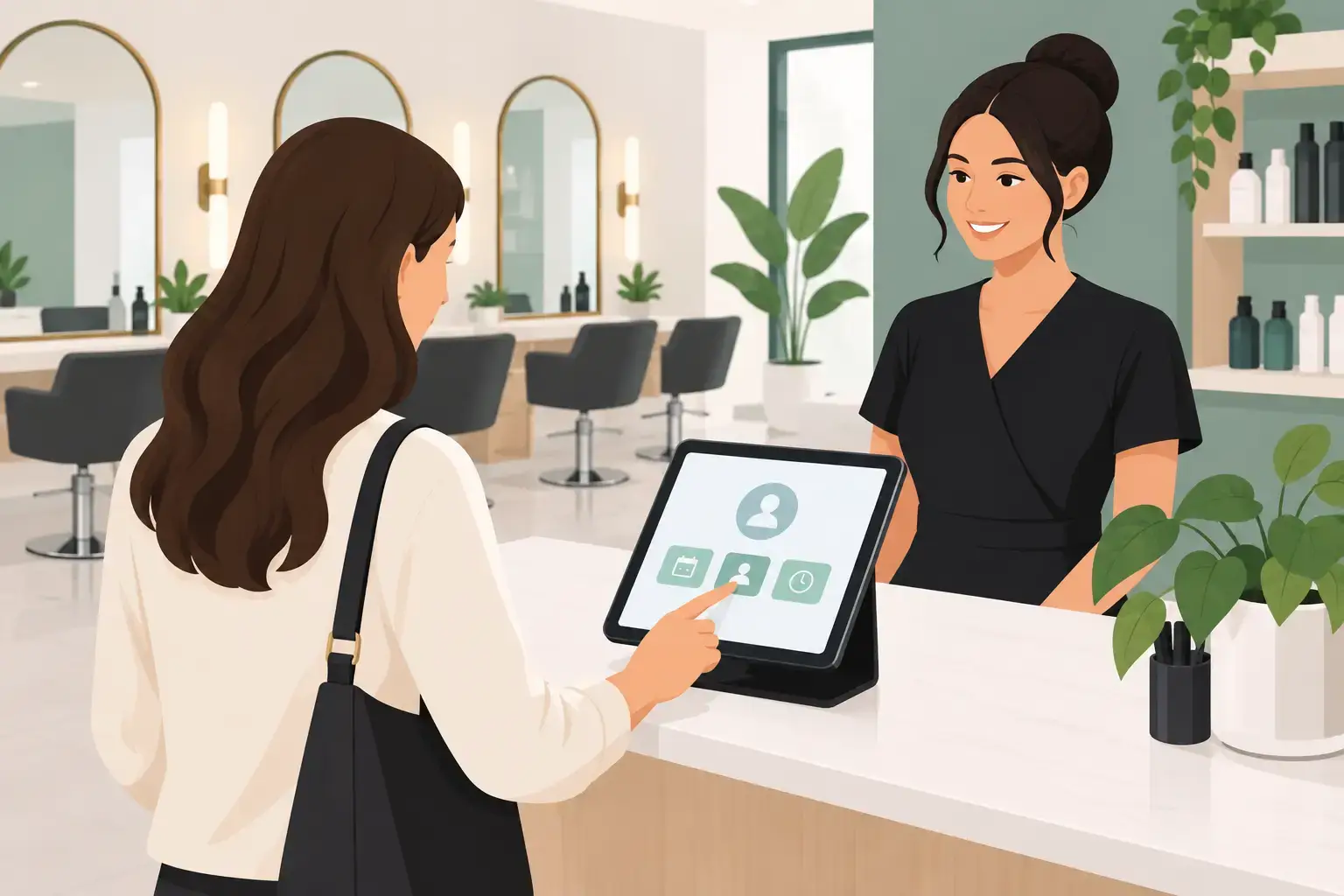
At the front desk or on a customer-facing tablet, a walk-in checks in with their name, mobile number and treatment. They can see the expected wait before they commit. Your team can then place them in the right queue, whether that is for a quick file and polish, a gel manicure or a longer full-set appointment.
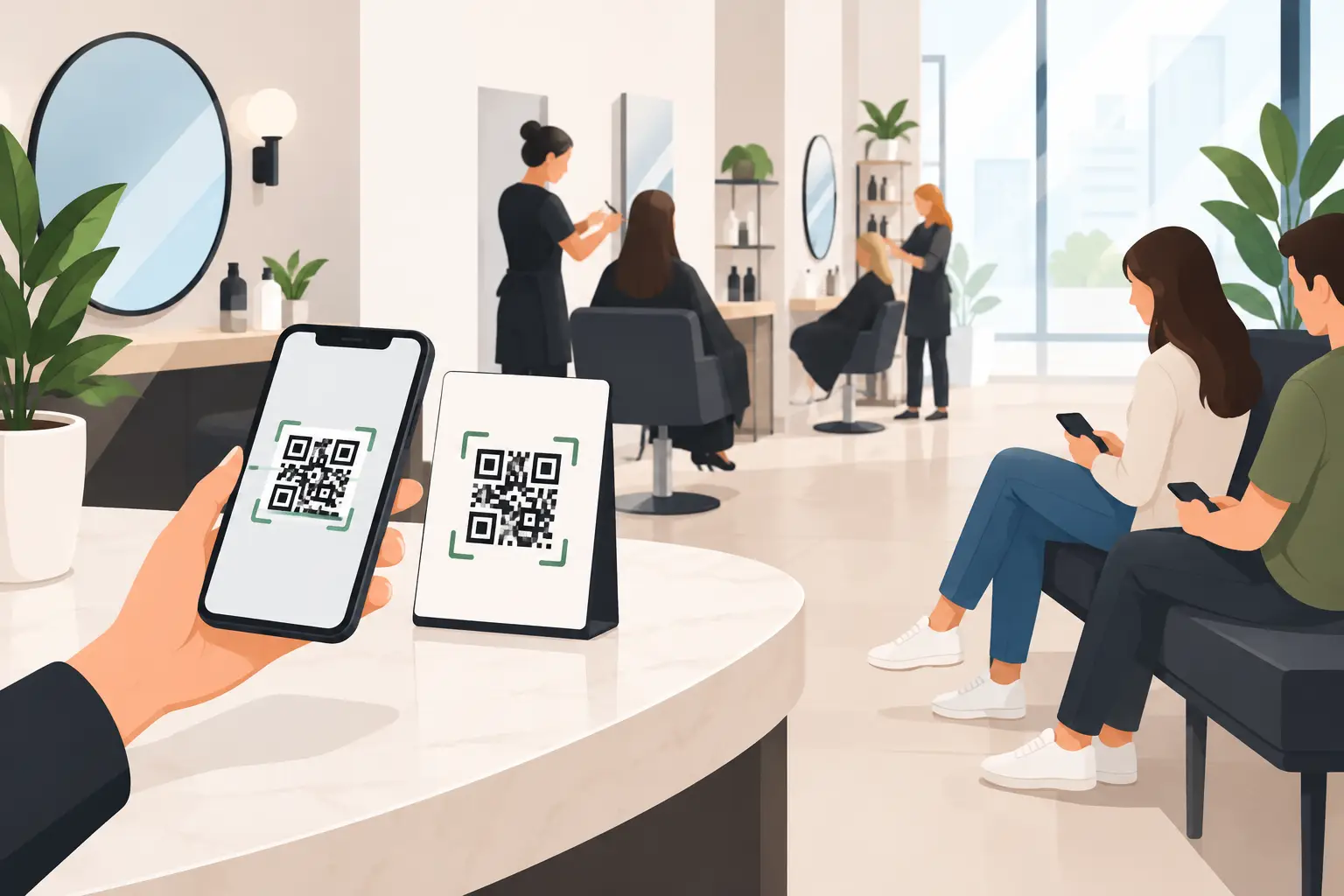
As the queue moves, the client should be able to check their place from their own phone. A QR code is ideal here. They scan it once and can get on with their day without downloading another app or creating an account.
When a nail tech is ready, staff call the next client and the system sends an automatic notification. That means the client can step outside, visit another shop or sit in their car without losing their place. You get fewer crowded reception areas and fewer missed opportunities at the chair.
It needs to work around treatments, not against them
A nail bar is not a barber queue where every service follows the same pattern. One client may need a straightforward polish change; another may want intricate art, removals and extensions. Your waiting list app needs to let staff record the service requested and make sensible decisions as capacity changes.
For example, a technician who specialises in builder gel may be free before the technician handling extensions. Rather than calling people in strict arrival order regardless of service, the team can allocate the next suitable client to the available station. The queue stays fair, but the floor keeps moving.
There is a trade-off. Overcomplicating every service option makes check-in slow. Keep your front-of-house choices practical: the treatments that genuinely affect timing and technician allocation. You can always discuss exact colours, shapes and add-ons when the client is seated.
Keep customers informed without chasing them
A client who knows there is a 35-minute wait makes a different decision from one who hears “not too long”. They might go for a coffee, shop nearby or return after collecting their child. The key is that they remain in your queue and know when to come back.
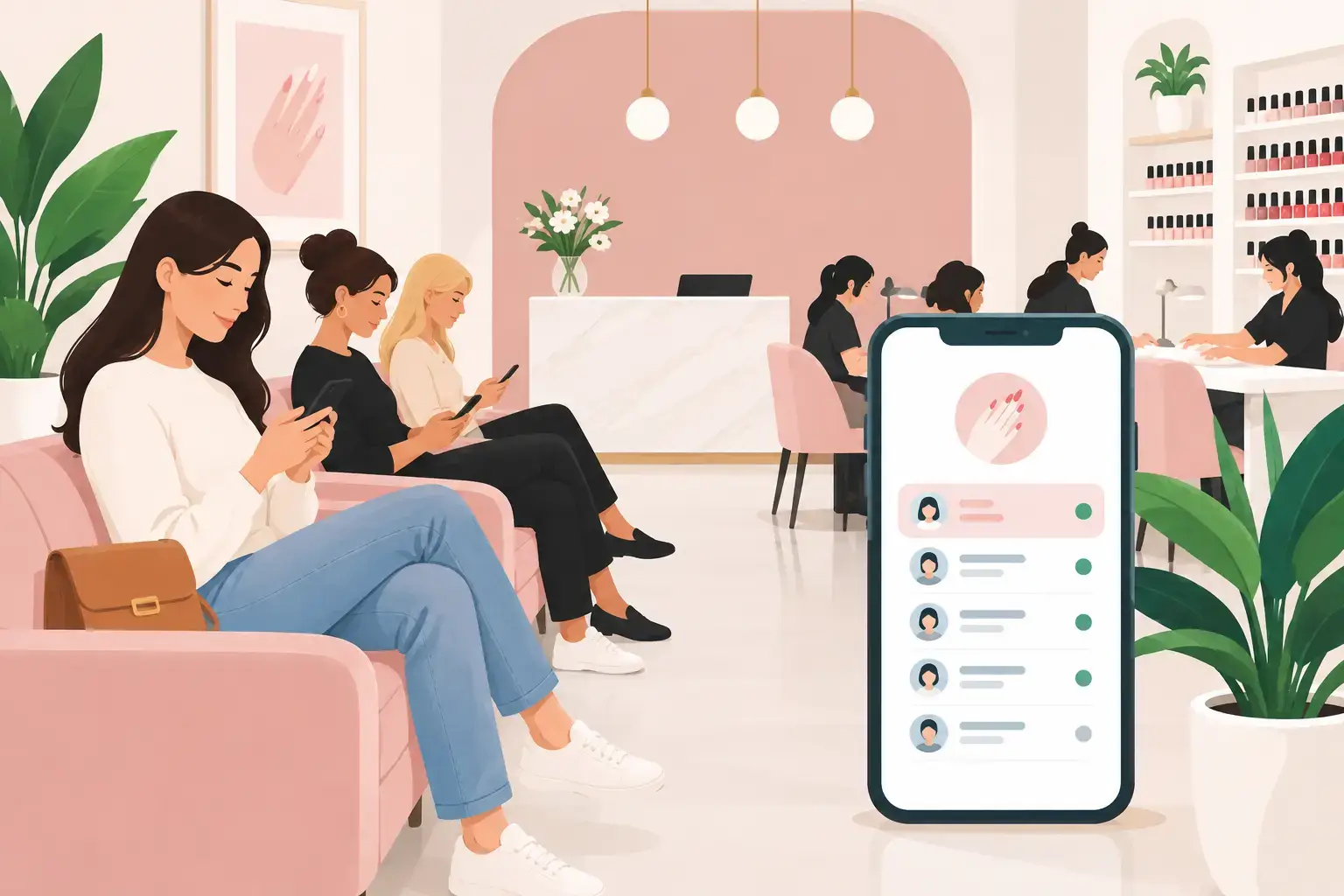
That is where live queue tracking matters. Instead of ringing the salon every ten minutes, clients can see movement for themselves. When they are next, they receive a message. Your receptionist is not tied to the phone, and your nail techs are not asked to stop mid-treatment to find someone in the waiting area.
Be realistic with your estimates. A waiting list is not a promise that every treatment will finish on the minute. Late arrivals, repairs and detailed nail art can all affect the day. But an honest live position is far better than a fixed estimate that becomes wrong as soon as one treatment runs over.
Give the team simple controls
The system should be easy enough for the whole team to use in seconds. Staff need to see who is waiting, what service they asked for and who is ready for a chair. They should be able to call, skip, move or remove a client without remembering passwords or searching through multiple screens.
That does not mean everyone needs access to everything. Your nail techs need the live queue and customer details required to do their job. They do not need access to total takings, staff performance or sensitive owner reports.
This separation matters in a busy salon. Staff screens should help the team run the floor. Owner-only information should stay behind a PIN, where it belongs. You see the money and performance picture without turning everyday queue management into an admin job.
Turn queue data into better staffing decisions
A waiting list app earns its place when it helps after the rush as well as during it. Over time, your queue history can show when walk-ins arrive, how long they wait, which services are requested most often and when clients are most likely to leave.
You may find that Friday late afternoons need one extra technician, while Wednesday mornings have spare capacity. Perhaps gel removal requests regularly create a bottleneck, or one station is underused because clients are not being allocated quickly enough. These are practical decisions you can make from the pattern of real trade, rather than from memory alone.
It also helps you see the difference between a busy-looking salon and a productive one. A packed waiting area is not automatically good news if people are leaving unseen or waiting so long that they do not return. The goal is a steady flow: clients checking in, being kept informed, taking a seat and leaving happy enough to come back.
Avoid the common setup mistakes
Do not make the queue harder than the problem it solves. If staff have to sign into accounts, clients must download an app or you need new specialist equipment, adoption will suffer before the system has had a chance to help.
Use equipment you already have where possible. A tablet at reception can handle check-ins. Team members can manage the queue from their phones. A screen or TV can show a live queue board if your waiting area benefits from it. The setup should take minutes, not weeks of training.
Also decide how you will handle no-shows and family groups. If a parent checks in with two daughters, your team should be able to see the group clearly and allocate the right number of appointments or chairs. If somebody does not respond when called, set a straightforward rule: move them down, mark them absent or remove them after a reasonable window. Consistency prevents arguments.
Choosing the right system for your nail bar
A full appointment platform can make sense if most of your work is pre-booked and you need detailed calendars, deposits and automated reminders. But if walk-ins are a meaningful part of your takings, you need a system built for the moment clients arrive without an appointment.
Look for a nail salon waiting list app that makes the customer journey obvious: check in, see the wait, track the queue, get called. Then check the owner side. Can you see peak periods, staff activity and service patterns without exposing financial information to the whole team?
BarBerQue is designed around that practical walk-in flow. Customers check in without downloading an app, staff run the live queue from simple controls, and owners keep reporting and takings private behind an owner PIN.
The right queue system should not make your nail bar feel more digital for the sake of it. It should make a busy day feel more controlled. When clients can see where they stand, your team can keep working, and every available chair has a better chance of earning.