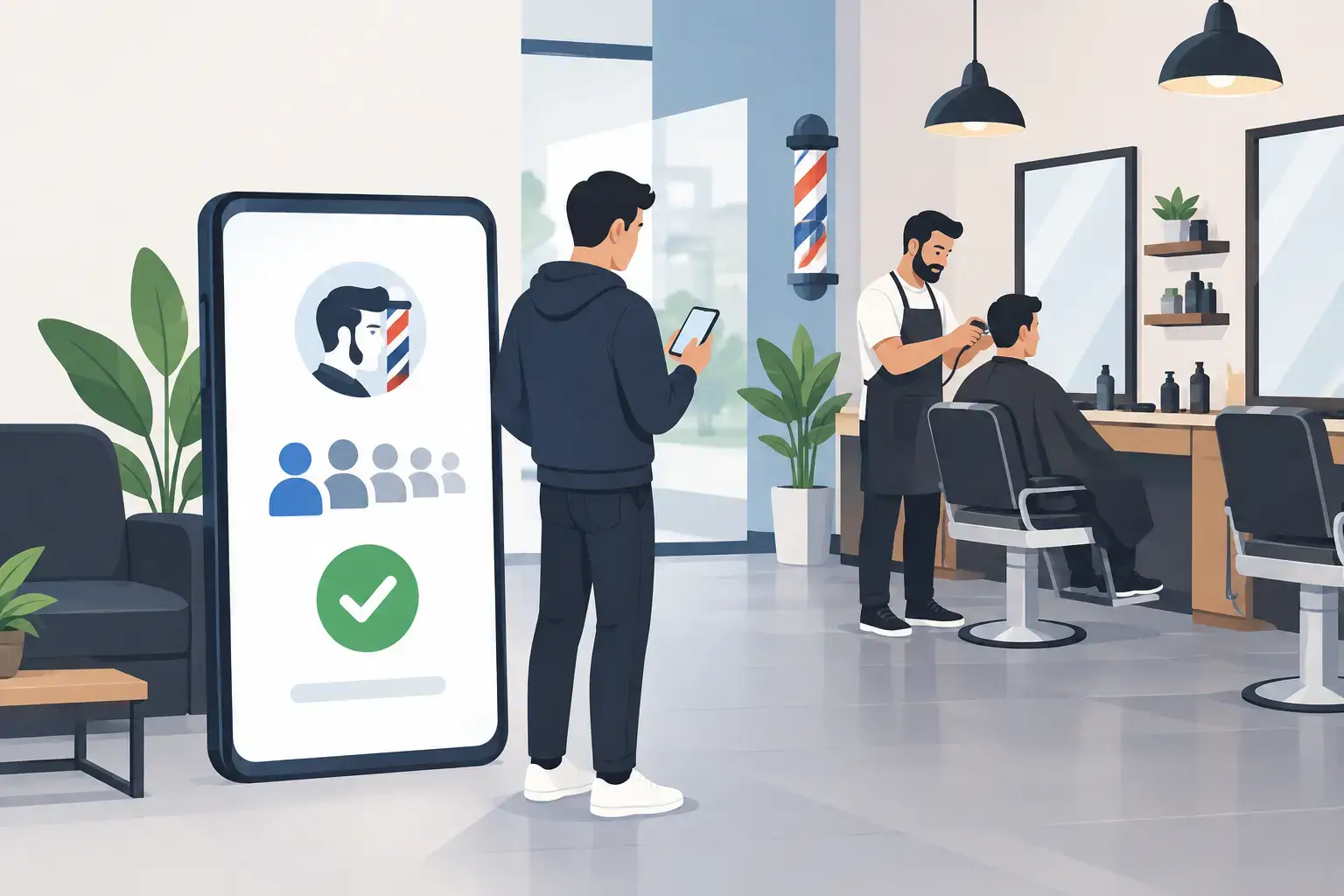
Saturday, 11.40am. Every chair is full, three people are waiting, someone has stepped outside for a coffee and a regular asks, “Who’s next?” That is the point where barbershop queue management software earns its keep. It replaces guesswork with a live, visible order that your customers and team can follow.
For walk-in businesses, the queue is not a small admin job. It is part of the service. If a customer does not know whether the wait is 15 minutes or an hour, they may leave and try elsewhere. If staff are relying on memory and shouted names, the floor can feel less organised than it really is. A simple queue system gives people certainty without turning your shop into a complicated booking operation.
What barbershop queue management software should fix
The best system does not try to change how your shop works. It supports the way busy walk-in trade already works: a customer arrives, checks in, sees an honest wait, and gets called when a barber, stylist or nail tech is ready.
That means no more writing names on scraps of paper, asking customers to stay within earshot, or having staff debate who arrived first. It also means customers do not need to download an app or create an account just to get a trim, treatment or manicure.
A practical queue should answer three questions immediately:
Who is waiting, and what are they waiting for?
How long is the likely wait?
Which member of the team is ready for the next customer?
If the answer takes a hunt through messages, a notebook or a staff member’s memory, the system is adding work rather than taking it away.
Give customers a reason to stay in the queue
A full waiting area is not always a good sign. It can look busy, but it can also feel uncomfortable and uncertain. Some customers will stand for ten minutes, decide they cannot judge the wait, then leave without telling anyone. That is lost trade you may never spot in the till.
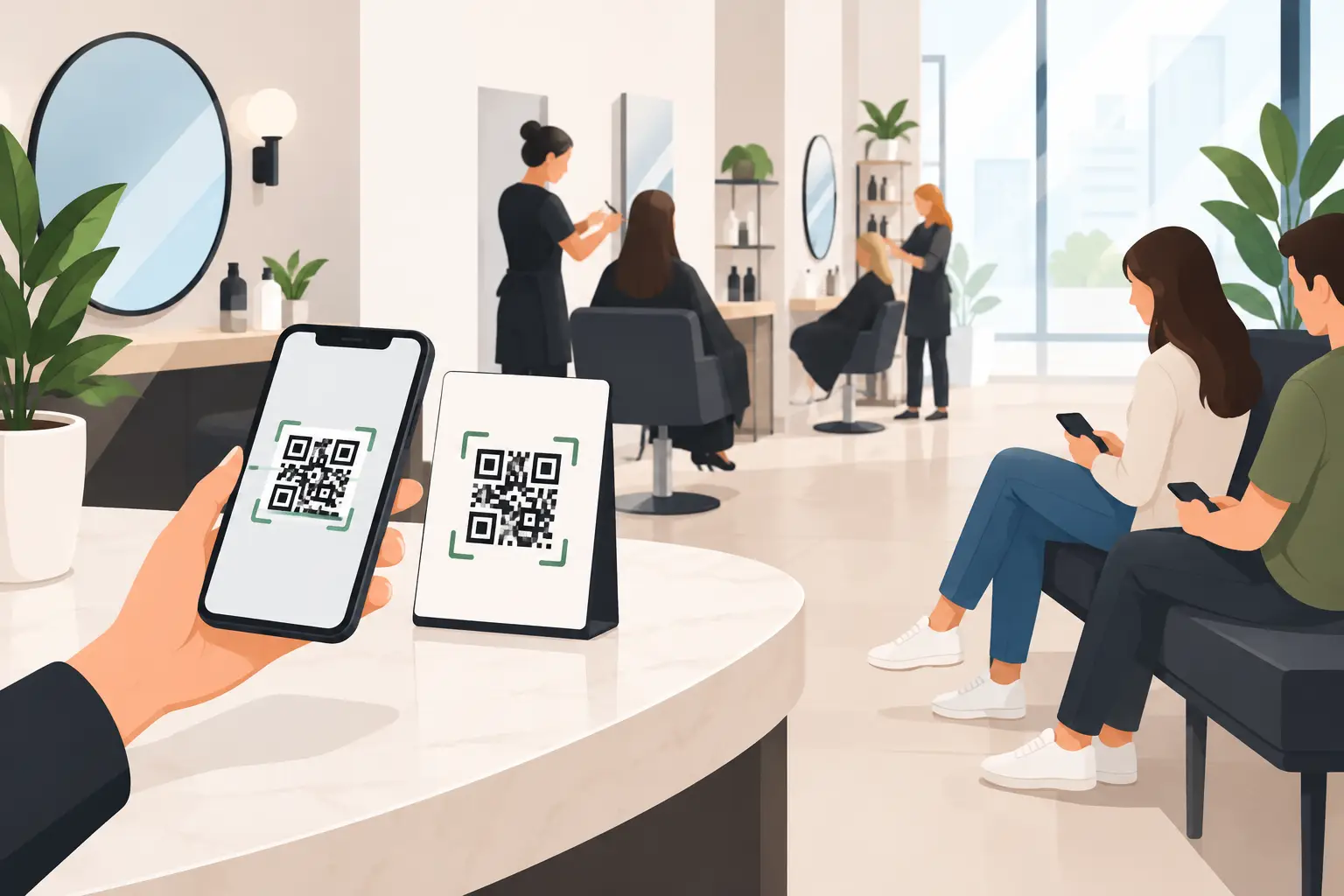
The useful change is letting customers join the queue, check their place from their phone through a QR code, and leave the premises without losing it. They can grab a coffee, browse nearby shops or wait in the car. When they are getting close, an automatic mobile phone notification tells them it is nearly their turn.
This is especially useful when the weather is poor, the shop is tight on space, or you have customers with children. A parent does not need to keep a restless child in a crowded barbershop just to protect their place. They need a clear time estimate and a prompt when to return.
There is a trade-off: wait times are estimates, not promises. A skin fade can run over. A colour correction or detailed nail treatment may take longer than expected. The right approach is to make the estimate visible and keep it updated as chairs and stations become free. Customers are usually more forgiving of a changing wait than of no information at all.
Keep the queue moving without staff logins
Your team should be able to run the queue in seconds. When a barber finishes, they should be able to mark themselves available, call the next customer and assign them to a chair. A stylist or nail tech should see what treatment is next and who is waiting, without being handed access to sensitive business figures.
This matters on a busy floor. Staff do not need another password to forget, another app to learn, or a manager to fix their account before the Saturday rush. Mobile controls can keep the job simple: tap when ready, call the next person, move on.
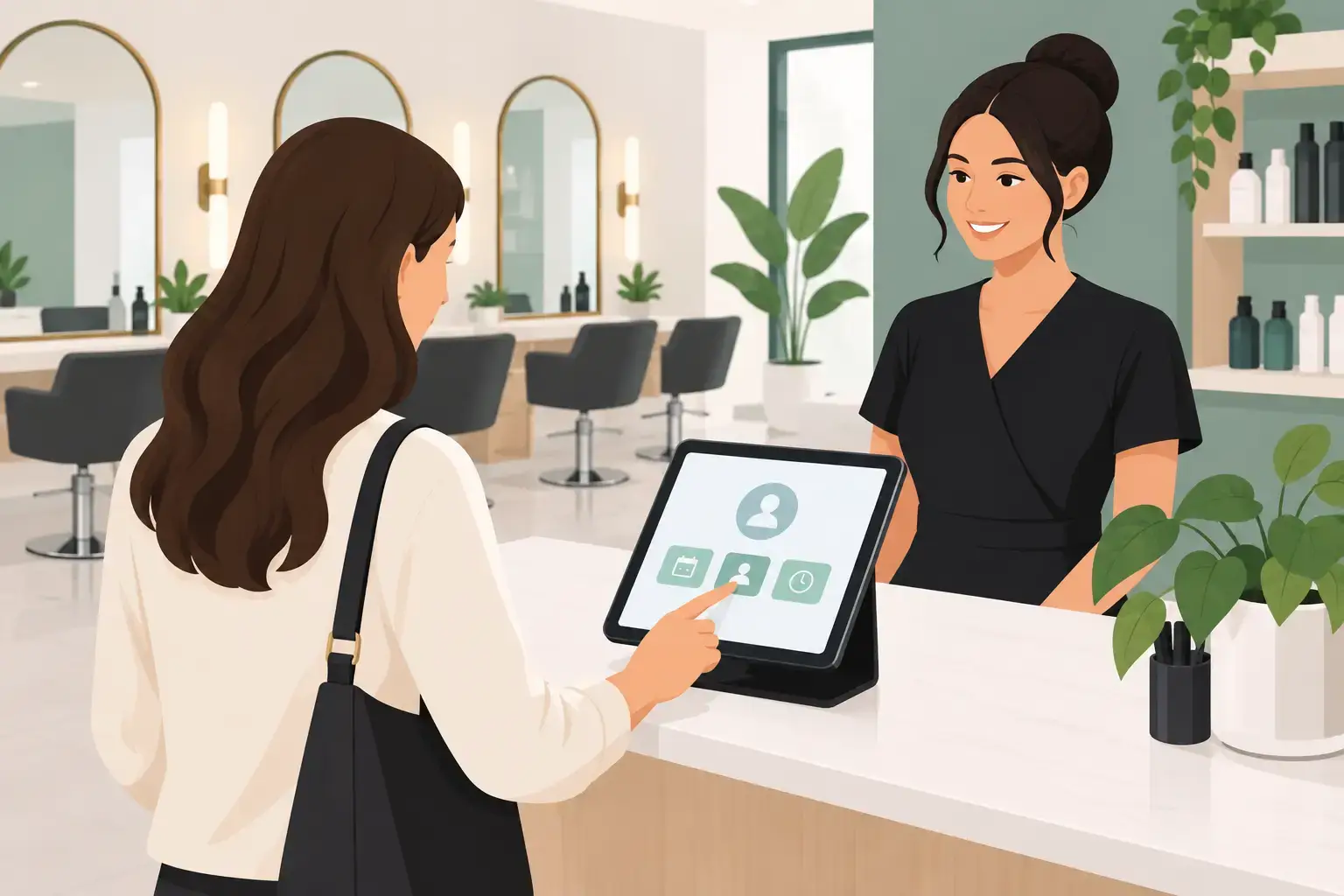
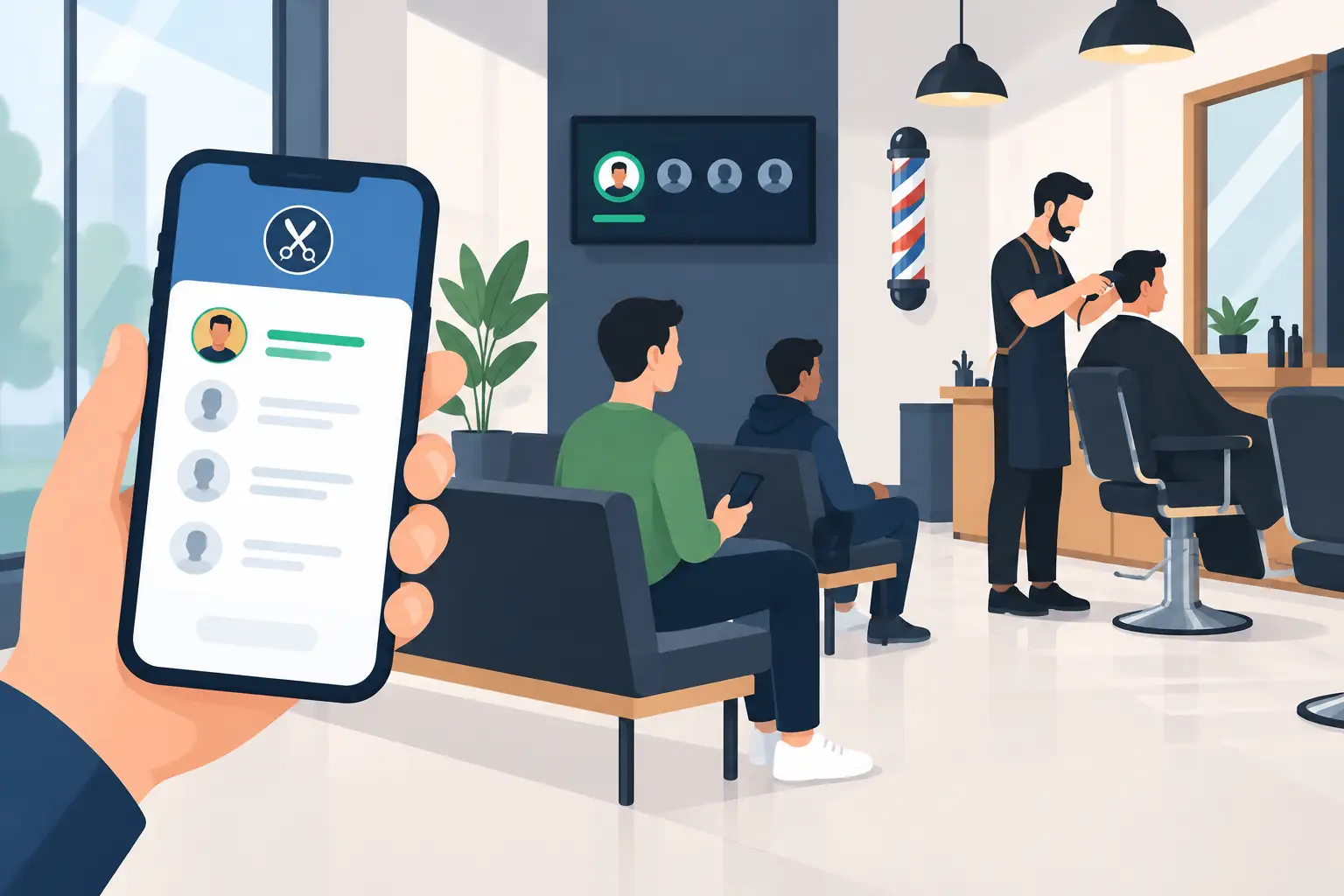
A customer-facing check-in tablet handles arrivals. A TV queue board, if you want one, gives the whole waiting area a clear view. Staff mobile phones manage the next step. Each screen has one job, so no one is scrolling through settings while a customer waits at reception.
The owner view should be different. Your team needs the queue. You need visibility of the business.
Protect your takings while your team runs the floor
Queue management is about more than calling names. Once your walk-in flow is recorded properly, you can see what is happening between the first customer and the last takings of the day.
Owner-only reporting can show peak trading periods, staff activity, services logged, loyalty activity and takings. That gives you something firmer than a general feeling that Saturdays are busy or that one chair is always turning over faster. You can look at the pattern, then make practical choices about rotas, breaks, chair allocation and promotions.
Financial information should stay private. Staff can need access to the customer queue without seeing everyone’s figures. Keeping takings and performance data behind an owner PIN is not about mistrust. It is sensible control. Your team runs the service; you see the money.
That separation is also useful when you have junior staff, freelance chair renters or several people sharing the same shop devices. They can keep customers moving without getting access to information that is only relevant to the owner or manager.
How a good walk-in queue works in practice
Picture a customer walking in at 1pm. They use the tablet to check in, choose the required service and see the current expected wait. Instead of standing by the door wondering what is happening, they scan a QR code and head out for lunch.
On the floor, your team can see the customer waiting in the right order. When a barber becomes free, they call the next customer. The customer receives a notification and returns when it is time to sit down. The barber assigns the chair, completes the service and moves to the next person.
That flow sounds basic because it should be. Good queue management software removes friction rather than introducing new rituals. BarBerQue is built around that low-effort setup: use the tablets, mobile phones and TVs you already have, get the queue live quickly, and avoid making customers or staff install another app.
Choose software that fits your shop, not a corporate chain
A booking system can be useful, particularly if most of your trade is pre-booked or your services need long, fixed appointments. But forcing every walk-in business into a full booking setup can create extra cost and admin for no real gain.
For many independent barbershops, salons and nail bars, the immediate problem is simpler: customers are arriving now, the waiting area is filling up, and nobody can confidently say how long the wait will be. A dedicated walk-in queue handles that problem directly.
When comparing options, look at how much effort the system asks from customers, staff and you. Check whether customers can see their place without an app, whether staff can operate it from a phone, and whether you can keep owner figures private. Ask how long setup takes, whether it works with your existing devices, and whether you can stop the subscription if it is not right for the shop.
Avoid paying for features that sound impressive but slow down the people using them. A queue tool only works if a new team member can understand it during a normal shift, not after a two-hour training session.
Use the queue to bring regulars back
The first win is stopping walk-ins from walking out. The next is giving regulars a reason to return.
When service and loyalty activity are logged, you have a clearer picture of who has stopped coming in. A thoughtful WhatsApp re-engagement message can remind lapsed regulars that you are there, whether that is a customer who has missed their usual cut or someone overdue a nail appointment. Keep it useful and respectful. A simple nudge is better than repeated sales messages.
The queue data also shows what your customers value. If certain services create long waits at particular times, you may need another pair of hands, a clearer service split or a different way of allocating chairs. You cannot remove every wait, but you can make it fairer, clearer and easier to manage.
A good queue does not make your shop feel less personal. It gives your team more time to be personal when the customer is in the chair. Start with a clear check-in, an honest wait and a reliable call when it is their turn. That is often all a walk-in customer needs to choose your shop again.