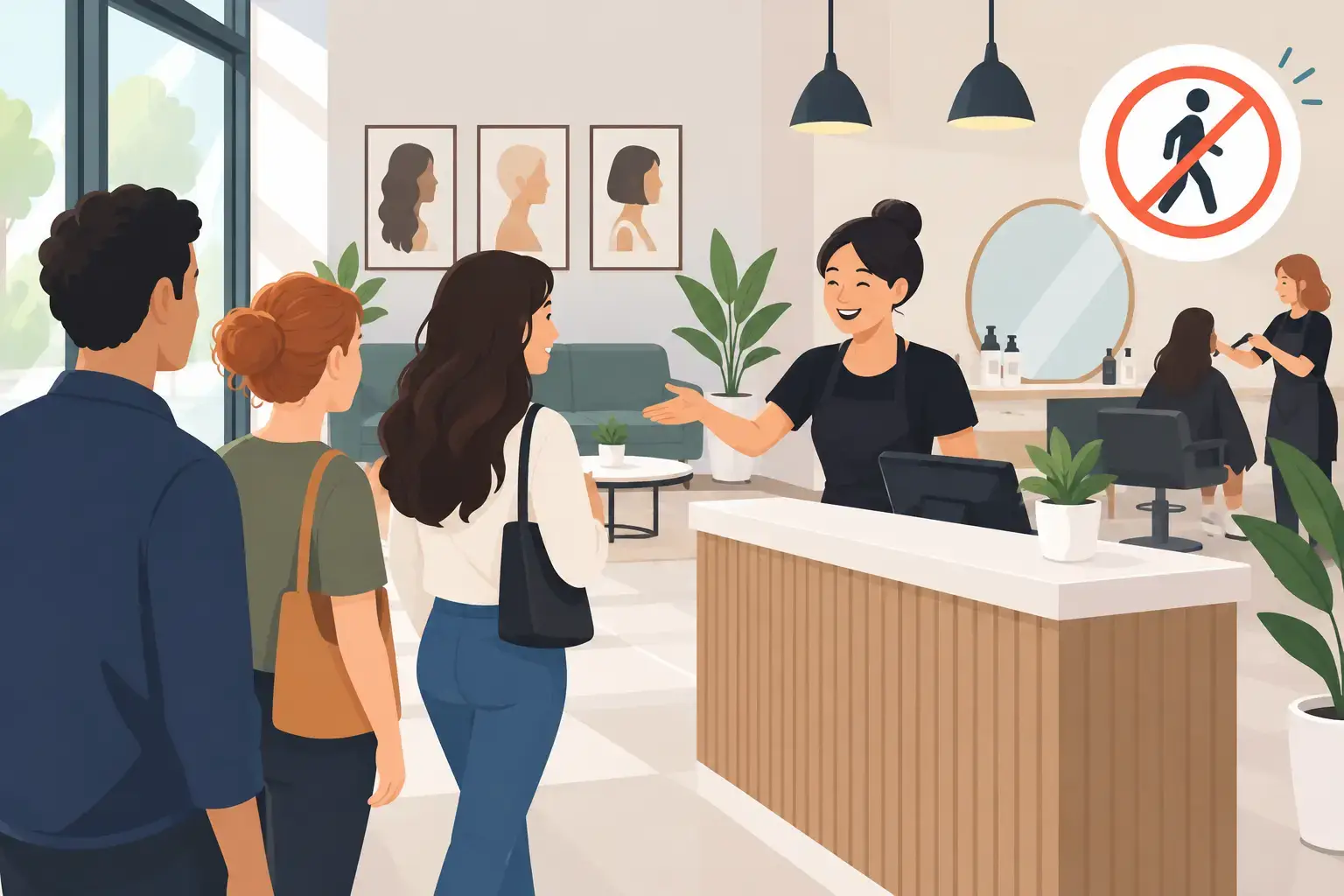
A client walks through the door at 11.40 on a Saturday, sees three people waiting and asks one question: “How long?” If nobody can give a straight answer, they may say they will come back later. Usually, they do not. A hair salon walk-in system turns that uncertain moment into a clear choice: check in, see the estimated wait and get a message when it is your turn.
For a salon that depends on passing trade, that clarity protects revenue. It also takes pressure off the front desk, stops repeated “who’s next?” conversations and gives your stylists a cleaner handover between clients.
Why walk-ins leave even when your salon is busy
Most clients do not mind waiting if they know what they are waiting for. What puts them off is a crowded reception area, vague promises and no sense of whether they will be seen in 15 minutes or 90.
That is especially true for cuts, blow-dries, fringe trims and other services clients expect to fit around a lunch break, school run or shopping trip. A full waiting area can look like demand from the owner’s side. From the client’s side, it can look like a wasted afternoon.
Paper lists and verbal queues work when there are two people waiting and one person managing the floor. They become unreliable when the phone rings, a colour client needs attention, a stylist finishes early or someone leaves without telling anyone. Names get missed. Arrival times become unclear. Your team is left trying to remember who was promised what.
A proper system gives every walk-in a visible place in line. The client knows they have been checked in. Your team knows the service they want, who they are waiting for and where the queue stands.
What a hair salon walk-in system should do
The point is not to turn your salon into a complicated booking operation. Walk-ins need a quick process that works while the floor is moving.
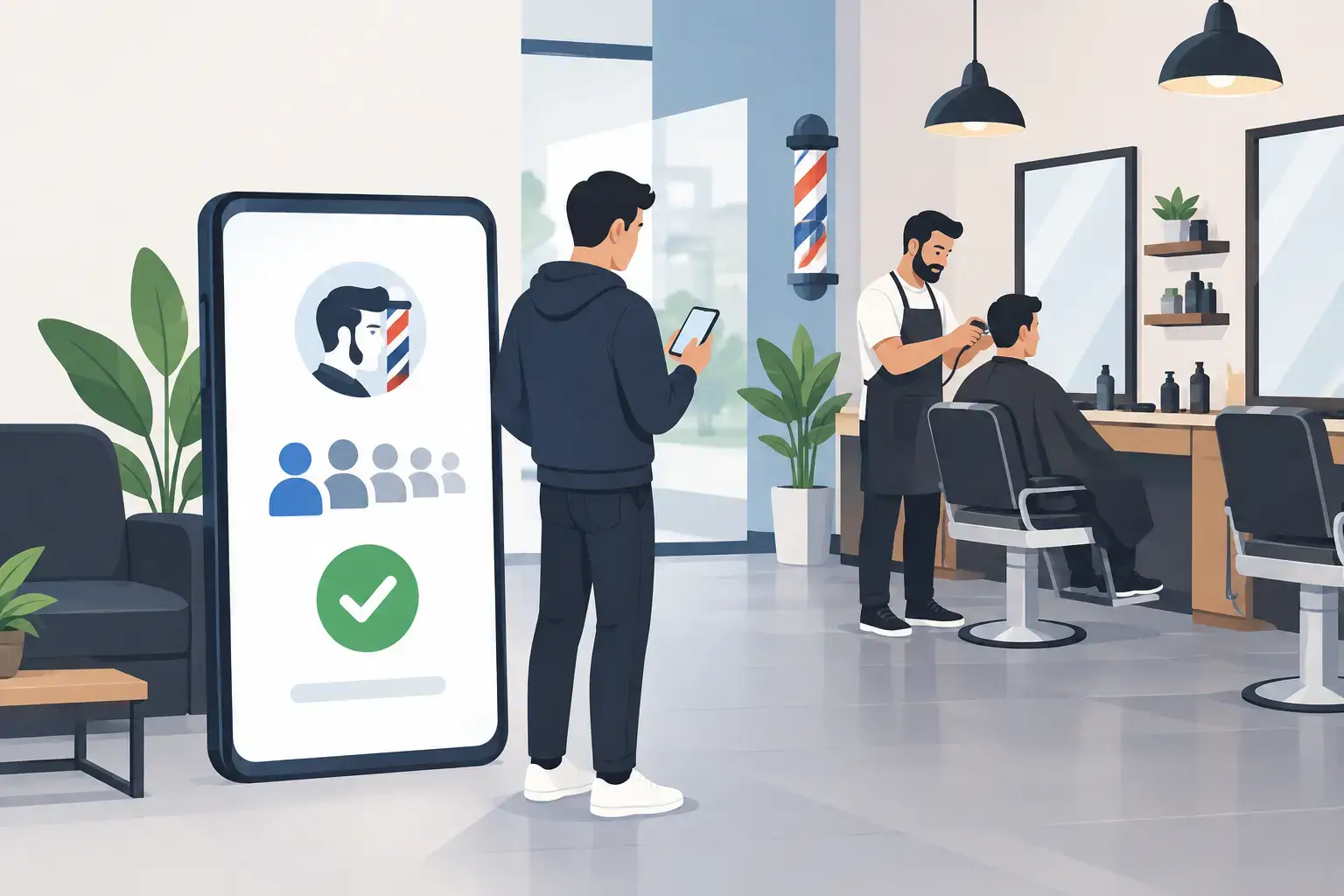
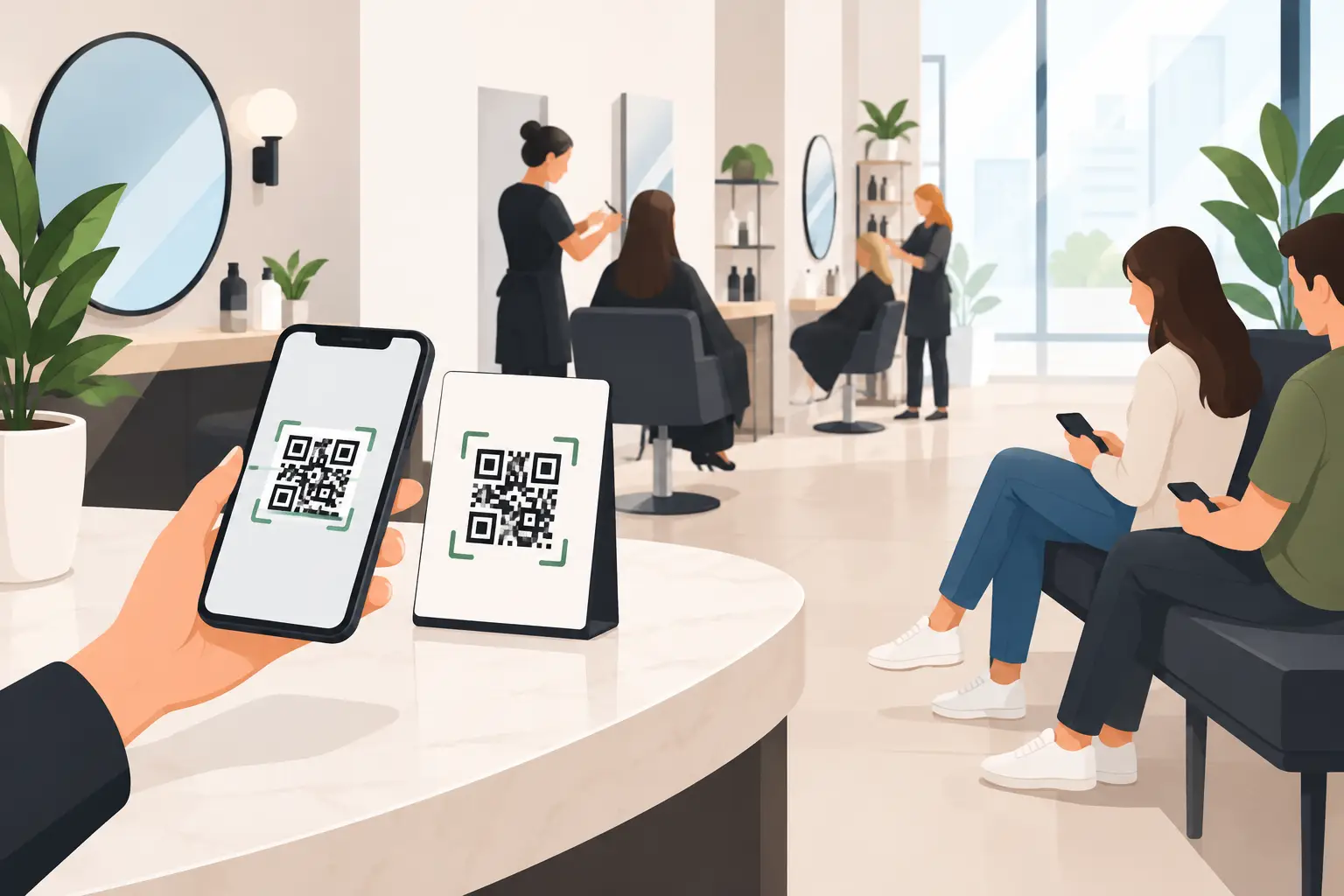
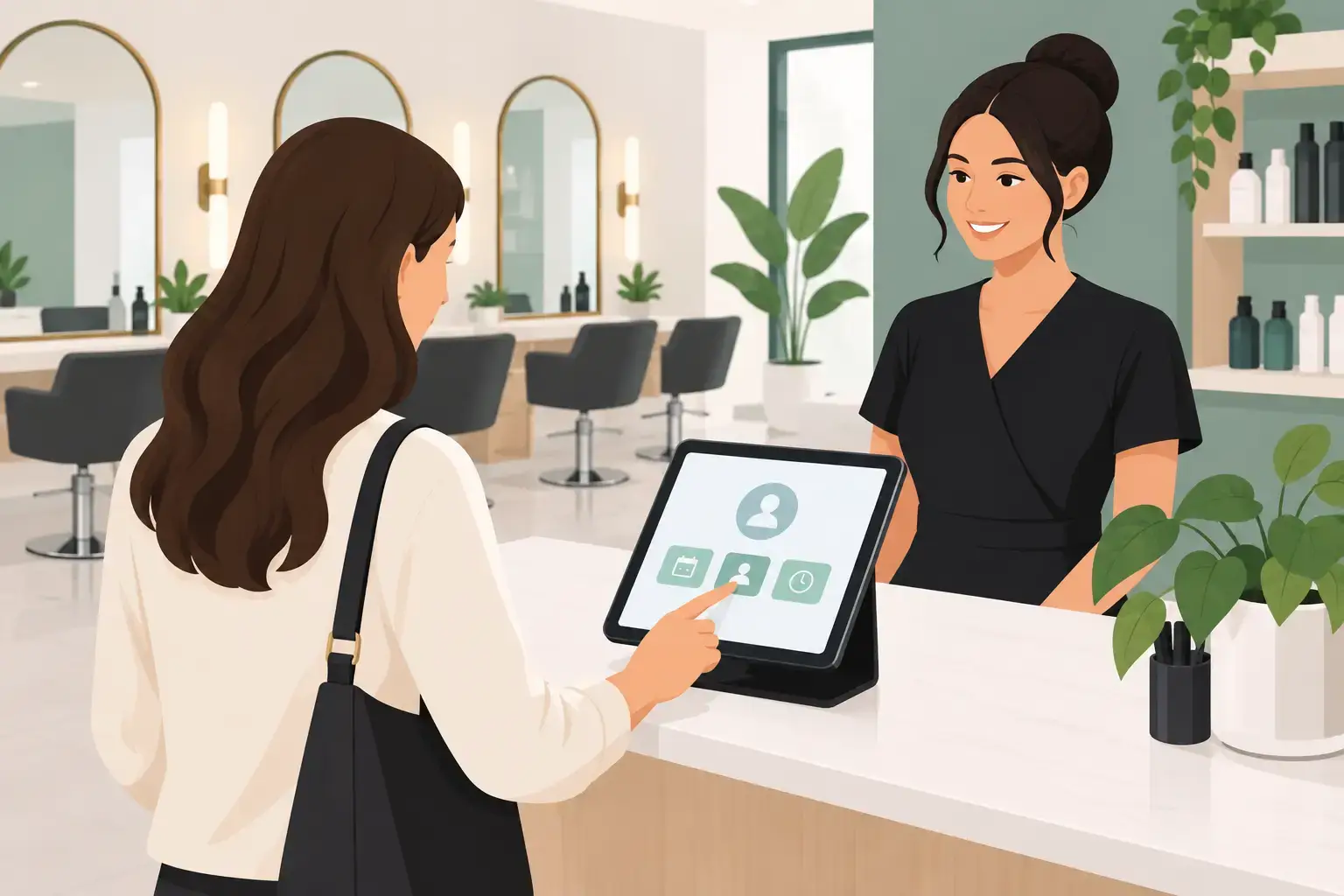
A client should be able to check in on a tablet, select the treatment or preferred stylist where appropriate, and leave their mobile number for updates. They can then see their position and estimated wait through a browser page or QR code. No app download. No account creation. No asking a receptionist to keep them updated every ten minutes.
When a chair or station is nearly free, the team can call the next client from a mobile. The client gets a mobile notification and returns when needed. That means they can grab a coffee, browse nearby shops or wait in the car without giving up their place.
For the salon, the working view should be equally simple. Staff need to see who is next, move a client if a different stylist becomes available, mark a service as started or completed, and manage no-shows without needing individual logins or a lengthy training session.
The owner view is different. Owners need to see takings, service activity, busy periods and staff performance. That information should sit behind an owner PIN, not on a screen any member of staff or client can browse. Your team runs the queue. You see the money.
The right workflow starts at the door
A useful walk-in system follows the way a salon already operates, rather than forcing the salon into a software workflow.
1. Check the client in quickly
At the entrance or reception, the client enters their name, number and required service. If they have a preferred stylist, that can be recorded too. For a parent bringing in children, the check-in should allow more than one person to join the queue without repeating the whole process.
Keep the questions short. A walk-in client is not filling out a consultation form at this stage. You need enough detail to place them correctly and contact them when they are next.
2. Set an honest expectation
An estimated wait is better than a promise you cannot keep. If two colour appointments are running late, the queue should reflect the reality on the floor. Clients are generally reasonable when you are upfront. They are less forgiving when 20 minutes becomes an hour with no update.
Wait estimates are not perfect, particularly in a salon where every consultation and finish can vary. That is fine. The goal is useful visibility, not false precision. A live queue gives clients a far better guide than a handwritten name on a pad behind reception.
3. Let clients leave without losing their place
This is where a queue system earns its keep. A client who can see their progress and receive a mobile notification does not need to occupy your reception chair. They are more likely to stay in the queue, even if they leave the premises.
It also changes the mood in the salon. Less crowding, fewer questions for staff and fewer people watching every stylist finish a service in the hope they are next.
4. Call the next client with confidence
When a stylist is ready, the team selects the next suitable client and sends the call. If that client does not respond, staff can move on without losing track of the queue. If another stylist has availability, clients can be reassigned where it makes sense.
There will always be exceptions. A regular may only want one stylist. A client booked for a wash and blow-dry cannot always take the next available cutting chair. The system should support those choices, not pretend every service is interchangeable.
Better queues improve the salon floor, not just reception
A clear queue affects more than client patience. It improves how the whole team communicates.
Stylists do not need to ask reception who is waiting or whether they have another client coming up. Managers can see where the pressure is building and step in before the reception area becomes frustrated. If one station is held up, the team can make sensible decisions around available staff and treatments.
It also creates useful records. Over time, you can see when walk-in demand peaks, which services are requested most often and how much trade you lose when wait times become too long. That is practical information for rotas, lunch cover and deciding whether to extend opening hours on your busiest day.
The figures need context, though. A busy Saturday does not automatically mean you need another stylist every Saturday. Look at the services requested, the number of people served, the number who leave the queue and whether a particular bottleneck keeps appearing. You may need an extra pair of hands at reception, faster turnover on a specific service or better cover during school holidays instead.
Avoid turning a simple queue into another job
Some systems ask too much of clients and staff. If customers must download an app, create a password or navigate a long form, many will not bother. If every team member needs a personal login and a training session before they can call the next client, adoption will slip when the shop gets busy.
The best setup is low-friction. Use the tablet, mobiles and TV screen you already have where possible. Put a customer-facing check-in screen by the door, give staff a clear mobile control screen and, if your waiting area suits it, show a live queue board on the TV.
BarBerQue is built around that type of setup: clients can check in without an app, staff can run the queue from their mobiles, and owners keep reporting and financial information private behind an owner PIN. The key benefit is not more technology on the floor. It is fewer loose ends.
Questions to settle before you choose a system
Before committing, think about your real service mix. A salon that mainly takes walk-in cuts needs a different setup from one that has long colour appointments alongside a few walk-in fringe trims. If most of your work is booked in advance, a walk-in queue may be a supporting tool rather than the centre of your operation.
Ask whether the system can handle preferred stylists, different treatment lengths, families checking in together and clients who step out. Check what staff can see compared with what only the owner can see. Financial privacy matters, particularly when several people share devices or work the front desk.
Also look at setup and commitment. You should not need new specialist hardware or weeks of training to test whether a queue system works for your salon. A short, card-free trial gives you the chance to use it on a properly busy day, not just look at a demo when the floor is quiet.
A clearer wait is a better first impression
Walk-in trade is often won or lost before a client has spoken to a stylist. Give them a clear wait, a place in the queue and the freedom to get on with their day. Your team spends less time managing uncertainty, and your salon gets a better chance to serve the clients who were already standing at the door.